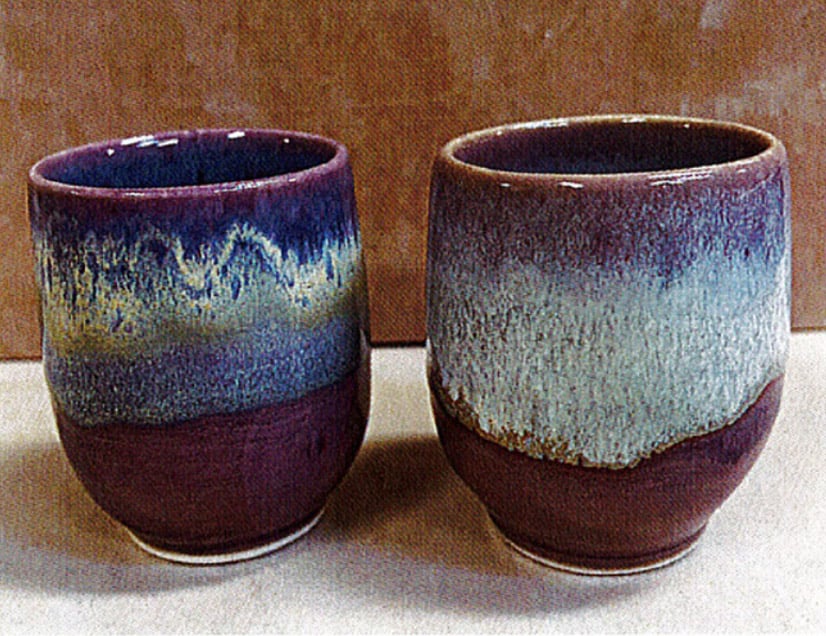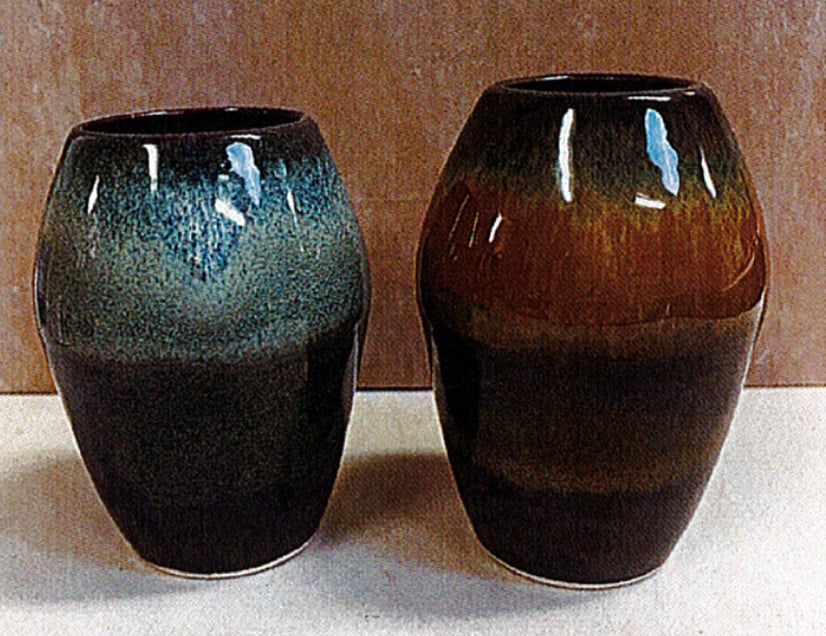
Ash glaze is a traditional ceramic glaze made from wood ash, which melts during firing to create natural variations in color, texture, and surface movement. Because ash contains minerals like calcium and potassium, it produces rich, unpredictable effects that highlight flame path and kiln atmosphere. Ash glazes are commonly associated with wood-fired pottery and rustic, organic ceramic surfaces.
Ash glaze
Glaze Questions FAQ
Can I layer glazes?
Yes you can layer glazes. We always recommend doing a test tile to make sure you are getting the result you want.
Can I use underglaze with any clay?
You can use underglaze with any clay that is in the same firing range (so if an underglaze is cone 06-6 then you could use cone 06 or cone 6 clay) – although the firing results may be different for cone 06 and cone 6.
How do I choose the right glaze for my project?
Match the glaze cone with the clay cone you have purchased (i.e. if you purchased CC547CT Wonder White Cone 06 clay you’ll want to choose cone 06 low fires glazes)
What’s the difference between low fire and midrange glazes?
Low-fire glazes are fired to cone 06 (~1852° – 2000° F) and mid-range glazes require a higher fire to cone 6 (~2158° – 2266° F).
Why did my glaze run, crawl, pinhole, blister, or craze?
There could be several reasons why – but the main reasons are improper application, incompatible materials, or firing issues.
How do I test a new glaze?
We recommend testing all new glazes on a test tile to make sure you are getting the results you want.
How much glaze do I need for a specific project?
It depends on the size of your project. We recommend one pint per 6-8 mugs (inside and out) when brushing for average coverage. If you naturally apply thick or thin, it may cover less or more.
Do you offer glaze sample sets?
Yes! We offer sample sets in all of our glaze lines.
Are your glazes food safe?
Lots of glazes are food safe, but we have some that aren’t. Please check the website and/or glaze bottle to see if the glaze you are wanting or have are food safe.
How does application thickness affect results?
It can affect color, texture and durability of your ceramic pieces – and can also be a reason for why your glaze is running, pinholing and/or crazing. Each company has different instructors for their glazes, so following the glaze bottle instructions will be the most helpful in how thick to apply the glaze.
Why does my finished piece not match the sample photo?
It could be several reasons including – application thickness, firing schedule, and lighting of the actual photo itself.
Professional Kiln Firing Services for Pottery & Ceramics
Georgies offers professional kiln firing for pottery and ceramic work, with regular bisque firing at cone 04 and glaze firing at cone 05 low-fire and cone 6 mid-range. Custom firing temperatures and schedules may also be available for full kiln loads. Review our firing information for current fees, turnaround times, preparation requirements, and available options.